
[Stories of producers] Ukraine
Ukrainian Cheesemakers in Wartime
There Is Enough Milk for Everyone
The story of a farmhouse family Skrylnik (Poltava regiom) the war nearly took and what it grew into instead:
“Before 2022, everything was simple: a farm, a dairy. Cows gave milk, milk went for processing, processing went to the shelf. A familiar cycle that had turned for years” — Kateryna Skrylnik told, owner a farmhouse
Then the war began and the cycle broke.
Nobody was buying the milk anymore
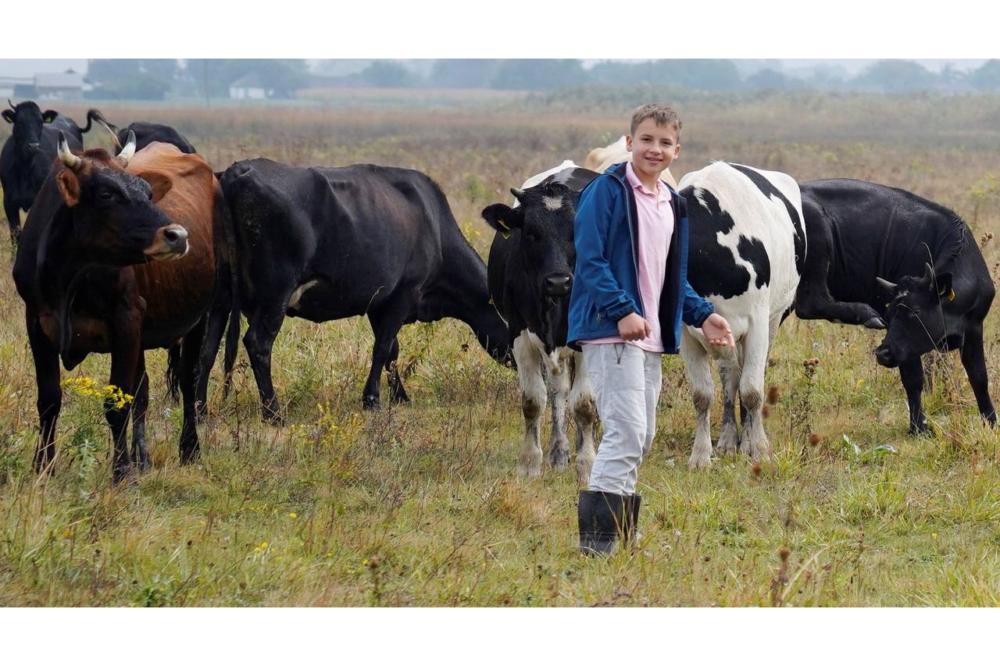
At first, no one would take the milk at all — we gave it away for free rather than pour it out. Then a buyer appeared at 3 hryvnias (0,07 euro) a liter — a price so low it was more of a gesture than a sale. After that, it came down to boiling milk in buckets right in the kitchen, because there was no other way.
And somewhere in that moment came the realization: either we move into craft processing, or we get rid of the animals.
And there were forty dairy cows, plus heifers, calves, bulls. And ten workers — ten families. Either let them go, or learn together how to make cheese, build working conditions, build processing from scratch.
We chose the second.
When half the house collapsed
In 2023, during renovation work, half the building suddenly collapsed. Standing there and looking at it was terrifying — it felt like this was where everything would end.
What saved me then was Tanya’s sister (Tetyana Dyadechko sister) — she kept saying not to worry, that we’d rebuild, that we’d learn. And we rebuilt. And we learned.
A demand that wasn’t there before
Now things are different. There’s demand for green tourism — people come to spin the cows’ tails, shape their own cheese by hand, savor cheese and wine right there on the farm.
And that became the motivation to keep going. Because your hands give out often enough — but with animals depending on you, you can’t allow yourself that. They need care every day, no matter your mood or circumstances.
There is enough milk for everyone
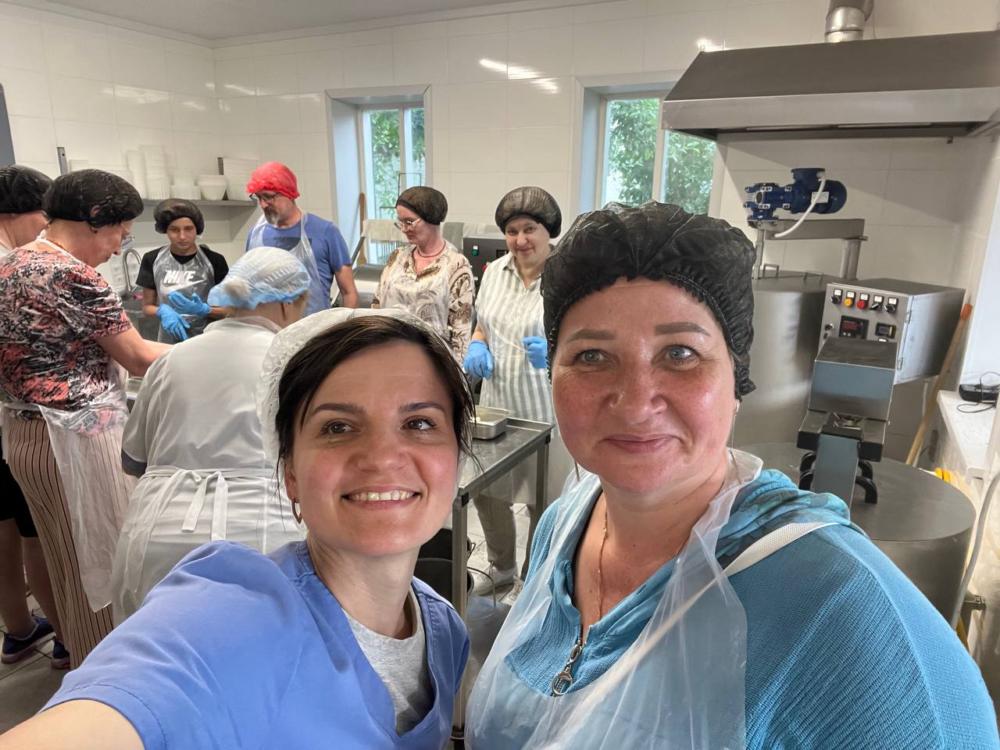
Now even the children make cheese. We also run free events for social groups: for internally displaced people, for soldiers of the Armed Forces of Ukraine, for parents with children who have disabilities or intellectual disabilities.
Sometimes we get criticized for it that a business should turn a profit, not give things away for free. But for us this isn’t charity for show, it’s food security. And to young people I always say the same thing: there’s enough milk for everyone.
A stove, the sun, and horses on standby
When the power and gas disappeared, it became clear: we needed a stove too. We restored a traditional Ukrainian clay oven — now we bake bread and paska in it.
Later we installed solar panels. They’re only enough for two hours of work — but that’s better than nothing.
We also keep horses. We were warned there could be fuel shortages — and with animals, you do everything that needs doing, whether there’s fuel or not.
https://www.instagram.com/molochna_ferma_skrylnykiv
A Farm Cannot Wait for the War to End
The story of the “DIYVO” family cheese dairy in Dnipropetrovsk region
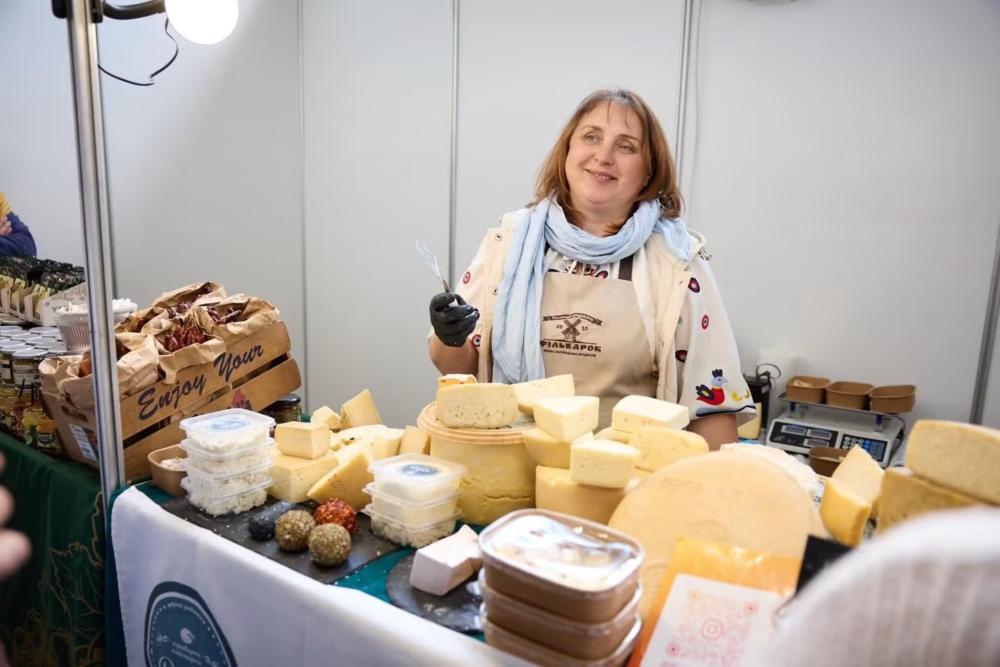
Polina Zhovtyak: Before the full-scale war, my husband Serhiy and I were building our family natural-products farm “Filvarok” together in the Dnipropetrovsk region. Each of us had our own responsibilities and a large share of the production and technical processes belonged to Serhiy.
On February 24, 2022, Serhiy went to defend Ukraine. Since then, the main responsibility for the farm, the animals, and the production has stayed with me.
And a farm cannot be put on pause because of a war. Animals need to be fed and milked every day, feed needs to be gathered, equipment repaired, milk processed, and ways found to sell the product.
So for us, the war didn’t mean a stop in the work — it meant having to learn to work in a completely different way.
The changes we had to make
The biggest change happened inside the farm itself. I had to take on many of the processes Serhiy used to handle, and go much deeper into cheesemaking myself.
I kept learning, mastering new techniques, experimenting a lot. Not everything worked out. We lost more than one liter of milk before I learned to understand it and manage more complex production processes.
At the same time, we had to become far more flexible in how we worked. We started working even more directly with people through social media, sharing not just our products but the real, everyday life of the farm.
The war taught us not to build long, predictable plans, but to react quickly to what’s happening today.
New products and directions the war brought
Yes. Paradoxically, it’s precisely in the war years that our cheesemaking grew the most.
Today our dairy “DIYVO” works with three kinds of milk: cow, goat, and sheep. We make young, semi-hard, and aged cheeses, work with natural and washed rinds and white mold, and produce fresh cheeses and pasta filata.
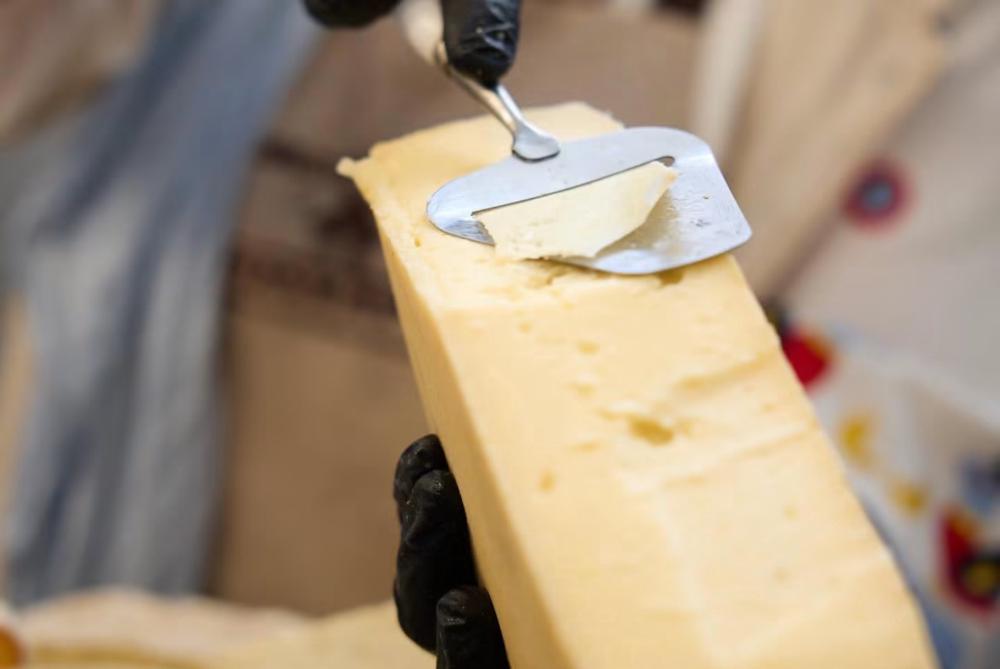
But an entirely different direction appeared too — the project “Take a Cow Under Your Care.”
A person can choose one of our cows, or another animal, and support its upkeep every month. In return, we send a box of thanks with products from the farm and share the animal’s life with them.
This became more than just a way of getting financial support. A community started forming around the farm — people who feel connected to its life.
Daily challenges and losses
The hardest part is the constant uncertainty.
We’re in the Dnipropetrovsk region and keep working through the war. On top of the usual farming risks came power outages, rising costs for fuel, feed, spare parts, and logistics, and constant equipment problems.
At the same time, people’s purchasing power has dropped. This summer, the intense heat pushed demand down, and there are fewer markets and other opportunities for direct sales.
But the farm’s costs don’t stop just because sales fall. A cow has to eat no matter how much cheese we sold today.
Sometimes the question is very concrete: will there be enough money for diesel to bring in the hay; can we repair the tractor; will there be enough feed; can we keep the whole herd.
Behind every one of those numbers is more than a business. There are living animals we’re responsible for.
What keeps us going
Above all — responsibility.
To the animals. To the people who work alongside us. To my husband, who is defending the country right now. And to everything we built together over many years.
The people around us help enormously. Someone buys our products. Someone takes a cow under their care. Someone buys a certificate for future products. Someone reposts, or simply tells others about us.
We also became part of Slow Food and the professional cheesemaking community. And especially during the war, I understood the value of these connections: being able to ask for advice, share experience, gain knowledge, or simply feel that you’re not alone.
Over these years we’ve learned to do so much ourselves. We’ve learned to work under conditions that once seemed impossible.
But more than anything, I don’t just want to “survive until the war ends.”