
[News from FACE] Annual meeting in Croatia
Reports and chronicles of a great gathering
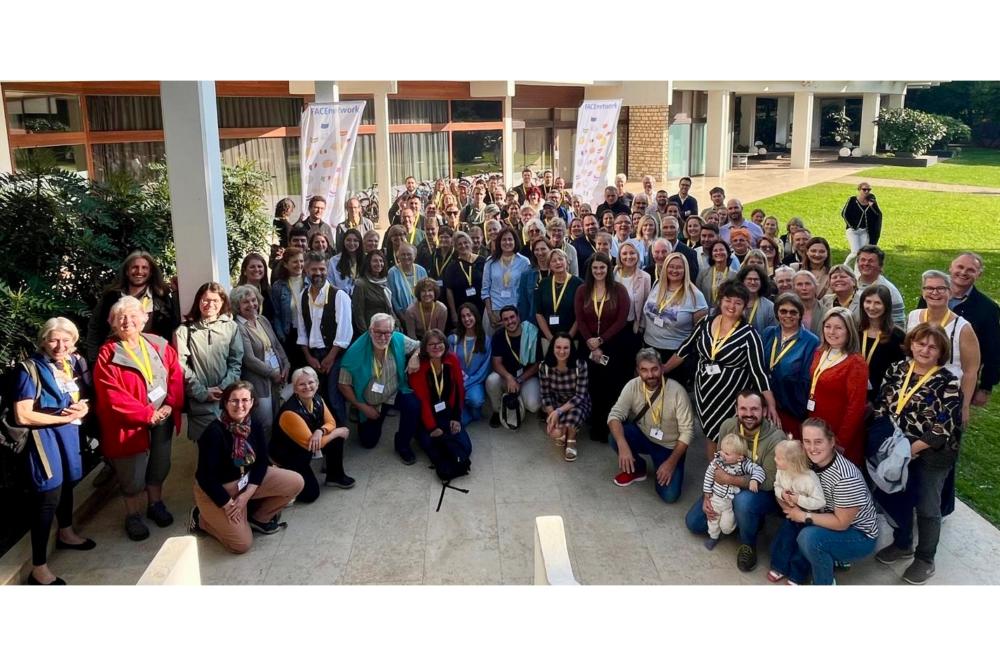
The 15th FACEnetwork annual congress was organised by SirCro in Rovinj, Croatia. An annual meeting of FACEnetwork always consists of excursions, a symposium, and the General Assembly. It’s a perfect opportunity to meet colleagues from other countries, gather ideas, and exchange experiences. This article provides a brief overview, a tour-report and a personal impression of three interesting and inspiring days on Croatia’s stunning coast.
Language of cheese
A meeting with over a hundred participants from 14 countries is a dynamic event. Not everyone speaks English very well, but that’s not a big problem. As emphasized by the symposium chair: “The most important thing is understanding each other. After all, we all speak the language of cheese.”
Excursions
This year, with the theme of “Marketing & Tourism,” our colleagues from SirCro organized five different excursions. Each excursion included a visit to at least one cheese factory or dairy producer, along with producers of meat, wine, olive oil, lavender, beer, and even truffles. This showcased the diversity of agricultural production in the province of Istria. The cheese and dairy producers visited—with goats, sheep, or cows—provided a good overview of what Istria and the nearby islands have to offer in the dairy sector.
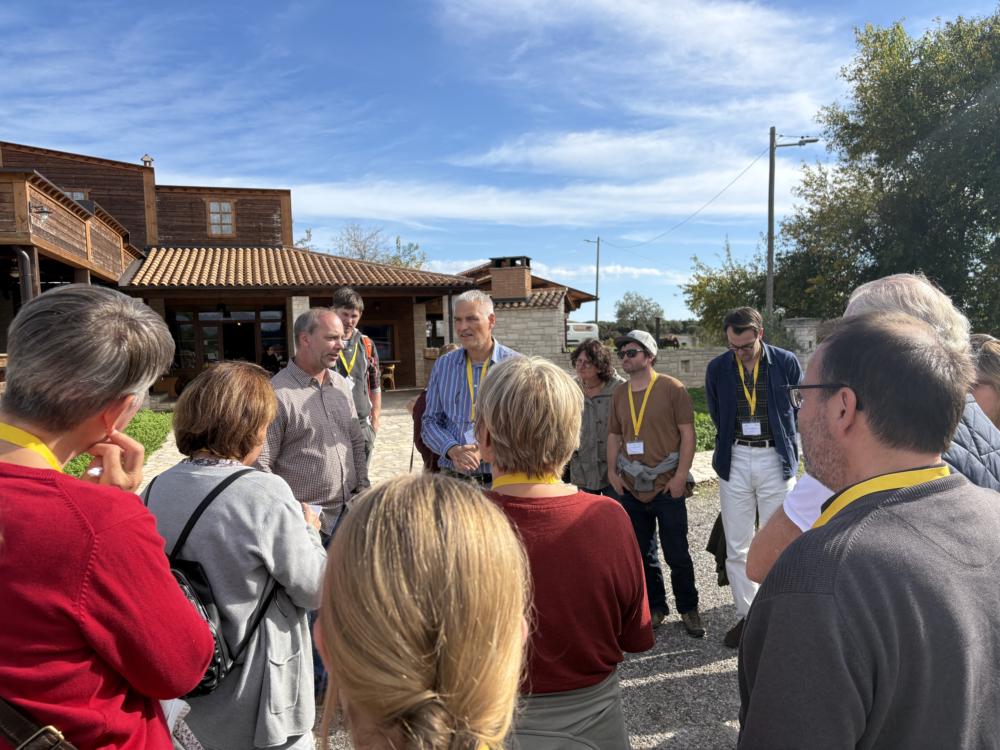
photo: Louise Fournier
SirCro
During the symposium, Anđelka Pejaković sketched for us how the expert support for cheesemakers in Croatia has developed in the previous 20 years and how it is organised today. The cooperation of SirCro with the Ministry of Agriculture and the Faculty of Agriculture of the University of Zagreb has been and still is of key importance.
Farm Tourism
In the other lectures various aspects of marketing and tourism were discussed and several countries presented different practices and methods for promoting tourism. Romina Zadravec, president of SirCro, showed us how she diversified her family farm near Zagreb. The traditional mixed farm is now a place where tourist can enjoy product tastings, home-made meals and also stay overnight. Lucija Gartner from Bohinj (Slovenia), spoke in detail about the range of farm experiences she offers individual tourists and groups. She also offered useful tips on planning, pricing, and promotion for others considering similar steps.
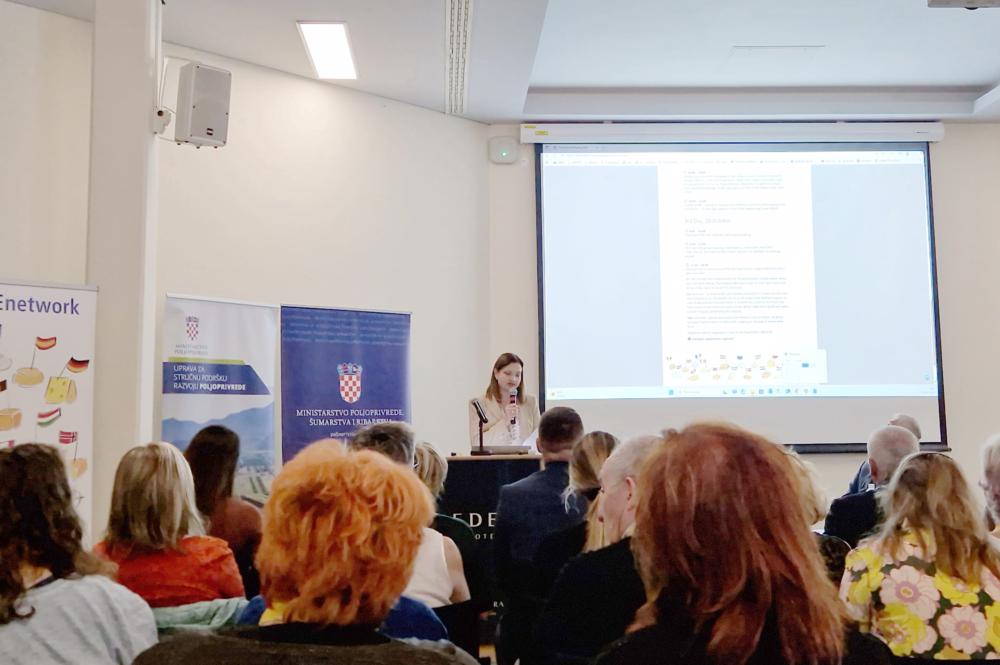
photo: VHM e.v.
Cheese and Dairy Contests
A different example of the role cheese and dairy can play in tourism was presented in the lecture by Gyöngyi Kovács, a researcher at the University of Agriculture in Gödöllő (Hungary). She explained how cheese festivals and cheese inspections are becoming increasingly important in tourism within Hungary. Cheese and dairy products are often appealing examples of local traditions, reinforce regional identity, and are also taken home by tourists as tasty souvenirs.
Product development
Milna Tudor Kalit, associate professor at the University of Zagreb, reported about her work on the development of attractive products for consumers. The results of several successful experiments, such as a probiotic drink made from goat’s milk and ice cream made with donkey’s milk, were presented at the symposium.
Geography
Samir Kalit , a professor at the University of Zagreb, contributed with a more technological lecture. He outlined how traditional Croatian cheese types are strongly linked to geographical location and thus to climate, soil, water availability, and vegetation type. Due to its unique “boomerang” shape, Croatia has a continental climate in the north and east, and a Mediterranean climate in the west and south. These zones have been influenced by various rulers (Austria-Hungary, Ottoman, and Venetian), resulting in their own customs and traditions, including those in livestock farming and milk processing.
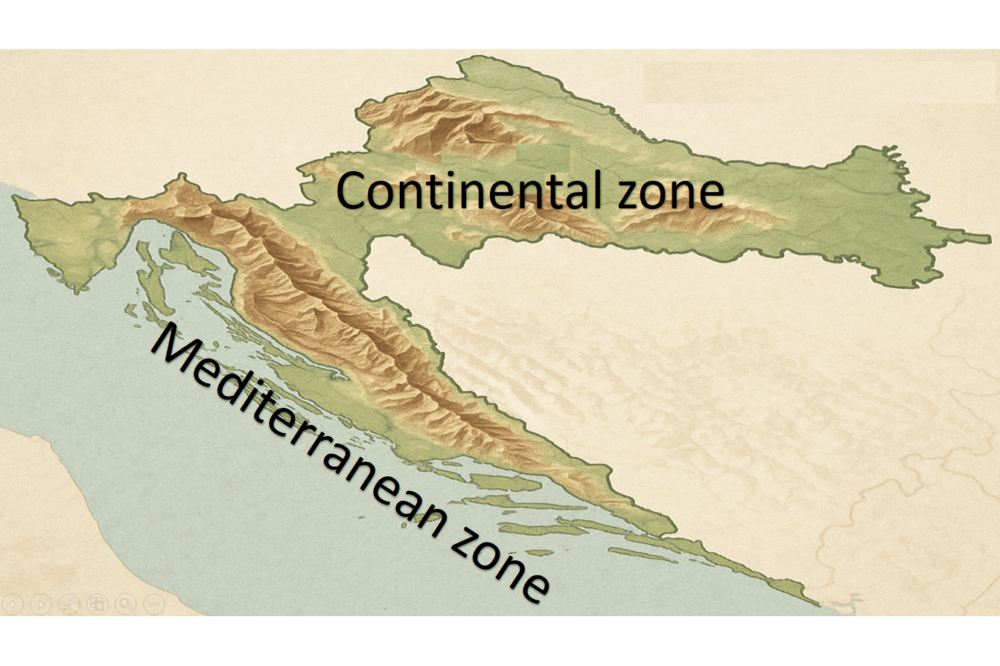
map of Croatia with climate zones from presentation of Samir Kalit
Paški sir
An example of cheese from the Mediterranean climate zone is the sheep cheese of the island of Pag. Martina Pernar Škunca, president of the Association of Cheese Producers from Pag, explained to us the particularities of this cheese that recently has been granted the PDO status.
Cheese Day
The FACEnetwork marketing group showed us their work the first Farmhouse and Artisan Cheese Day and encouraged the participants to join this celebration on the first of July.
>>Please note, all presentations are available on the website
Cheese Buffet
A highlight of the annual meeting is always the European Cheese Buffet. All participating cheesemakers are invited to bring their cheeses. The result is a wonderful overview of the European artisanal sector represented at the event. It’s also a great opportunity to sample some lesser-known cheeses and speak with fellow-producers.
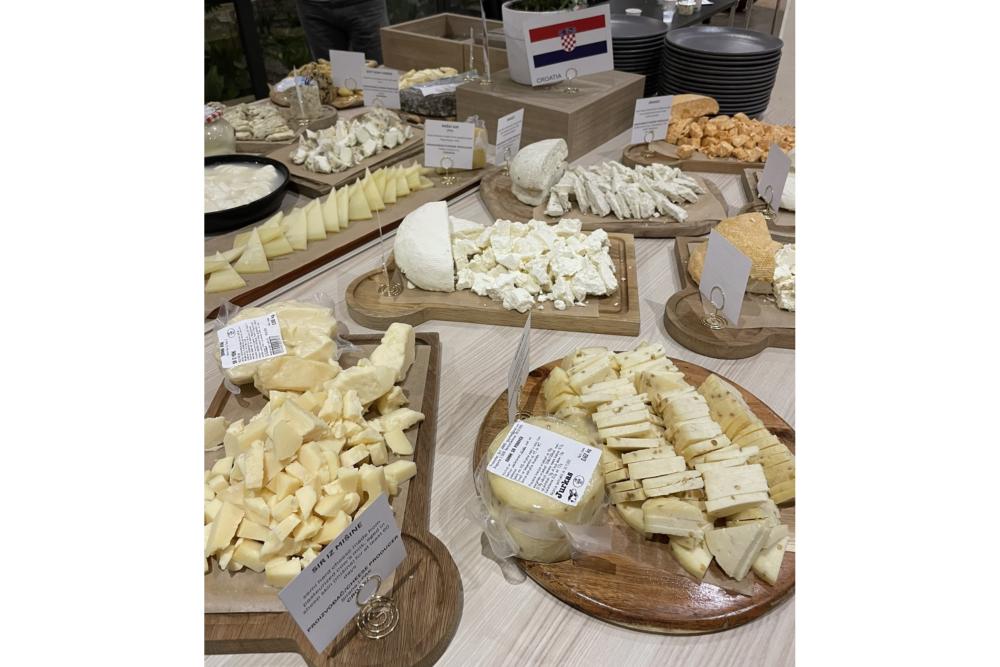
Croatian cheese on the buffet
Meetings and working groups
The annual meeting also serves as the venue for the FACEnetwork General Aassembly. The board and the three working groups (hygiene, marketing, technology) reported on their activities and plans for next year. A partially renewed executive board has been elected, consisting of chair Kerstin Jürss (Sweden), Treasurer Marc Albrecht- Seidel (Germany), Vice-Presidents Frédéric Blanchard (France), Irena Oresnik (Slovenia) and Tetyana Dyadechko (Ukraine). Members can read the report and view the presentations at the dedicated page on the website

Board of FACEnetwork with from left to right: Marc, Kerstin, Tetyana, Irena, Frédéric
Next year
From 19 to 21 October 2026 the annual meeting will be in Spain. The dairy technology center Esneki Zentroa from the Basque Country, is taking the organisation at hand. The theme will be “dairy technology”, mark your calendars!
text: Barbara Hart
Impression of one of the tours
Citation from report for FNEC by Louise Fournier
“We chose a tour that allowed us to visit, first, a goat farm, then a farm with cows and sheep, and finally a vineyard. The visit began at the Kumparička goat farm, near Pula. This farm has been in operation since 2008, is certified organic, and has approximately 200 goats, 50% of which produce milk (1.5 liters/goat/day). The goats graze all day and have access to more than 140 species of Mediterranean plants.
The farmer explained that coyotes pose significant predation problems to his livestock and are becoming a real scourge. He has three dogs to protect the flock. In terms of processing, all the milk is transformed into raw milk cheese, primarily to make semi hard cheese (tomme), with varying aging times, or Labneh (a fermented milk cheese originating from Lebanon). His cheeses are sold locally, on the European market, and through the Slow Food organization. For meat, the farmer has opened a restaurant on his farm, which allows him to showcase his products. We were able to taste his cheeses at a lovely buffet. It was delicious. We were able to ask him one last question regarding his relationship with the veterinary services and the administration. The farmer explained that he had no problems with them, citing as an example the possibility in Croatia of selling farm cheeses to schools!
For the second farm visit, Šantamarina, the producer has 60 dairy cows, 60 beef cows, and 300 sheep for meat and milk. He transforms raw milk into semi hard cheese (tomme) from cow’s milk, a mixed cheese of sheep’s and cow’s milk, and also produces a sheep’s milk cheese typical of the Istrian region, similar to ricotta. He explained that he never kept any stock since the day’s production was sold immediately! The farm also has a restaurant, allowing visitors to taste their products. Sales are primarily direct, with two shops selling local food products in the city of Pula. They also sell products at events such as fairs and exhibitions.
For our last stop, we discovered Kalavojna, a wine and olive oil estate. This family of winemakers cultivates 13 hectares of vines and 20 hectares of olive trees. The grape variety equivalent to the Croatian variety is Chardonnay. They have a wide range of still and sparkling wines, aged for varying lengths of time depending on the desired product. Sales are primarily local, in wine shops and supermarkets, with only 5% exported. They are not as impacted as in France by the deteriorating economic situation because the quantities are not the same, and neither is the number of producers, making stock clearance less complicated.”
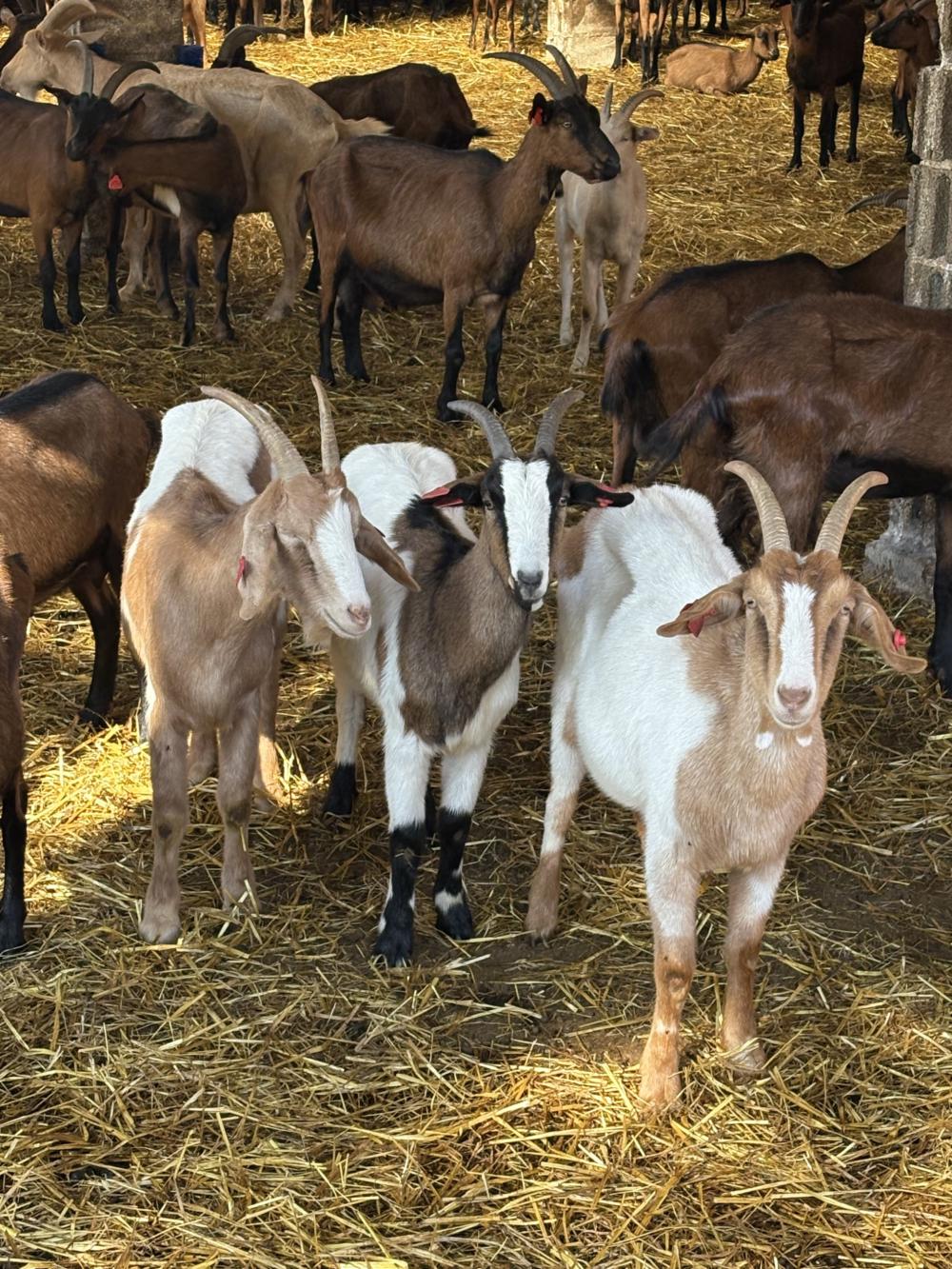
photo: Louise Fournier
My FACEnetwork meeting in Croatia as a French cheesemaker…
written by Benoît Renouard (ANPLF)
“My journey started on Saturday, I had many things to be done and prepared in the farm and in the lab so that I could be away for 4 days the week after. The 4 of us (ANPLF) landed on Sunday afternoon at Venice airport and then drove to Croatia where we met other members from other countries.
It is always nice to meet with colleagues and friends from all over Europe. I find it great that 23 countries are able to join within FACEnetwork and try to act together and defend what I find great values.
On Monday we took the bus and visited 2 goat and cow farms and then a winery. As a cheese-maker I first would like to thank people who open their farm doors to strangers. I like these visits, it is great to try to understand the local situation and lives there, it is great to compare with our farms and find ways to improve things. I was very interested to see how farmers not only raise cattle, make and sell cheese but also have tourists visiting their farms. How easily they invested in restaurants, rooms, tours.
On Tuesday we had the conferences all together in a meeting room. From cheese history to tourism and meeting with all the friends we meet once a year. We had at the end of the afternoon the association annual meeting and the focus on next years’ major challenges.
I love the evening all together and the cheese tour…
We eventually had a marketing group meeting on Wednesday before we drove back to Venice and flew back to Paris and eventually to our farms and family.
I am back home with questions and answers about our milking machine, our products to come and the local association animation thanks to discussions throughout these 3 day-meeting.”
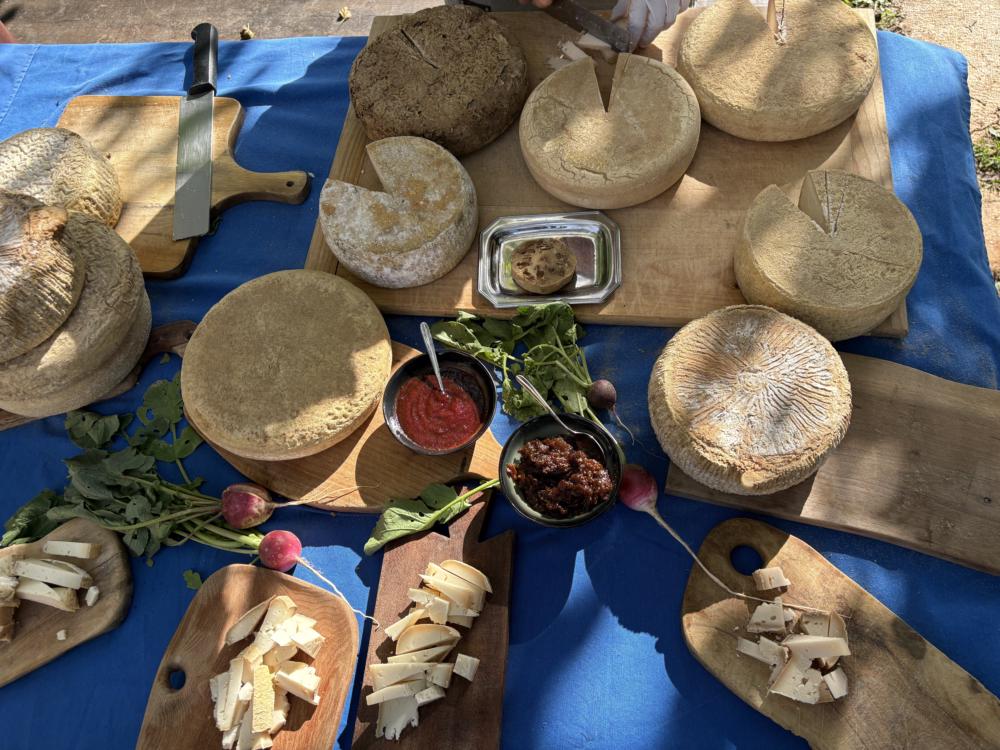
photo: Louise Fournier